

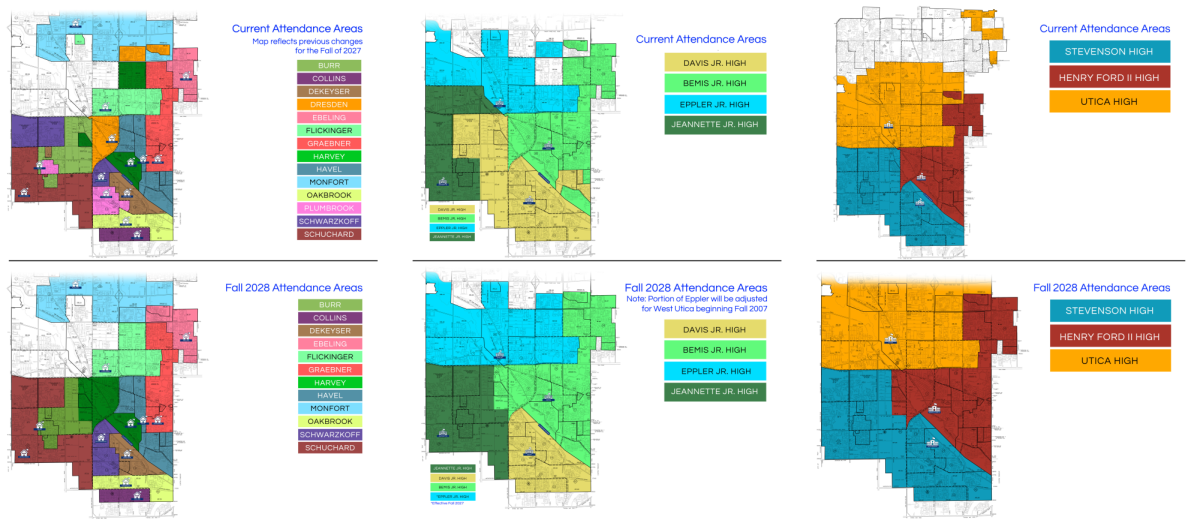
 Following the Oct. 13 memo from Utica Community Schools superintendent Robert Monroe, the district has released more concrete plans for building configuration changes that will take effect in the 2027-2028 school year. When the changes were initially announced, speculation cited neighborhood rezoning as a possibility; now, it is becoming reality.
Within the current parameters of UCS, problems such as neighborhoods being divided into separate attendance areas and inconsistency in feeder schools are prevalent. Main goals behind rezoning are optimizing building capacity and fixing disparities within existing zones as stated in various statements made by the district.
“I’m not sure what it’s going to look like exactly, but I know they still have some time to make that decision,” Utica High School principal Timothy Youngblood said. “They know what our capacity is. Utica has held quite a bit more kids than we have right now.”
Attendance areas around Henry Ford II High School are the major focus at this time. Ford’s school population will grow as a result of the new maps as the school is taking neighborhoods from the current Utica High School and Stevenson High School zones. All announcements concern zones south of 23 Mile Road.
“The Enrollment Distribution Advisory Committee has been reviewing enrollment patterns in our district,” Monroe said. “They have mostly been focusing on elementary attendance areas.”
Out of the 36 schools in UCS, 25 are elementary schools. In company with losing sixth graders, the elementary schools are scheduled to undergo remodeling, attendance rezoning, and even removal.
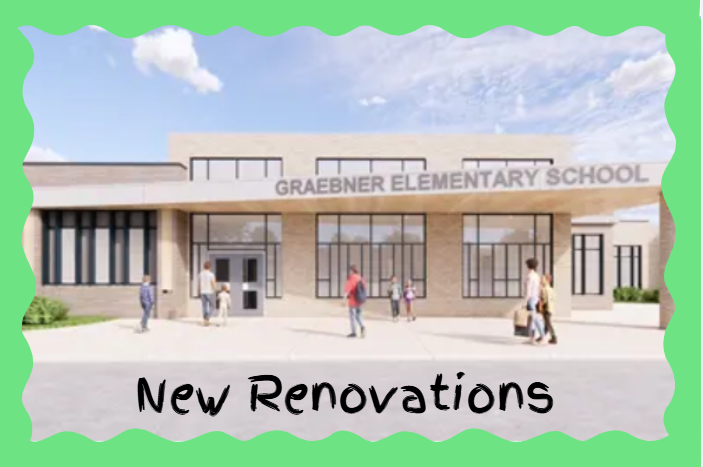
Browning Elementary is the only school announced to be completely shut down. All attending students will be consolidated into Havel Elementary and Graebner Elementary. Future use of the building itself is unknown at this time. Reconstruction plans for both Havel and Graebner have been announced. Students from both schools will be relocated to Rose Kidd Elementary, a UCS school that was closed in 2011 due to complete reconstruction, during renovation periods.
“Our review of grade configurations began with our review of facility capacity and then other advantages followed, such as grade configurations mirroring curriculum organization,” Monroe said. “If further closures take place, the district will evaluate the sites for the best use of the facility on an individual basis.”
Dresden Elementary and Harvey Elementary have no official changes released aside from map rezoning. However, the entirety of Dresden’s attendance area has been adjusted to fit into Harvey, Ebeling, and Monfort Elementaries. It has been assumed by UCS families that Harvey will undergo some form of expansion to accommodate the influx of students. As stated on the UCS website, “the district is working closely with the Sterling Heights planning department to evaluate the enrollment impact of the development.”
“I feel sad that kids in my neighborhood aren’t going to Jack Harvey Elementary anymore, but I know Flickinger will be great. It will let the kids stay with their friends. I loved my elementary teachers and school, but I know Flickinger will be awesome and have good teachers too,” sophomore Sophia Lenders said. “I also like how the students will be going to Eppler Junior High because it will let them keep all the friends they have made, which is great when you get to high school.”
Changes being made to UCS are still in progress. Updates are consistently posted to both the district website and the Utica Community Schools YouTube channel. The district, as well as all schools involved, are taking the necessary actions to bring the Building for the Future project together.
Click to read the first article on building configuration changes.